Before the session
Pick the session that fits what your client is bringing and set the focus of the hour in a few minutes.
Get 100 ready-to-run therapy sessions, with goals, questions, exercises and guidance to prep your sessions in minutes, without limiting your clinical listening.
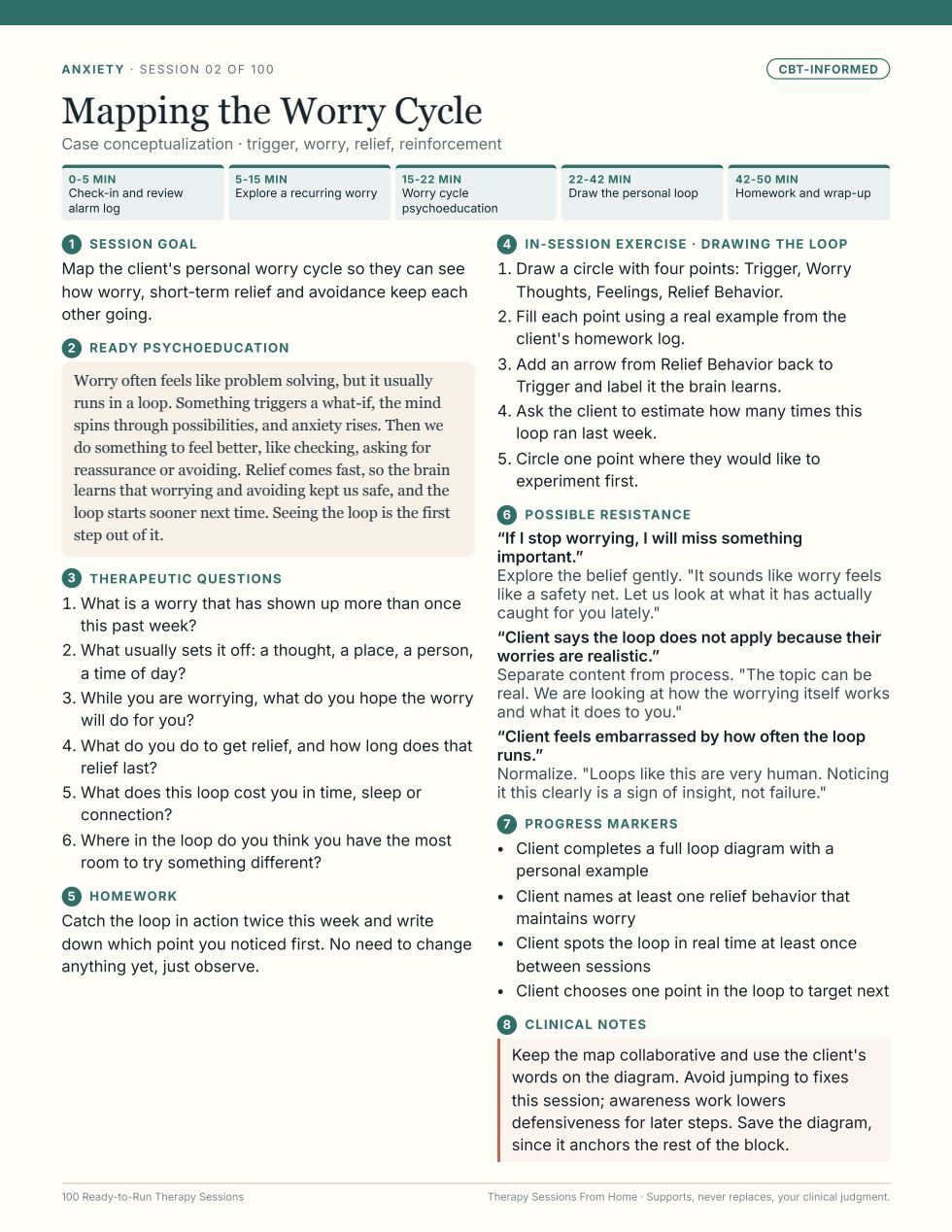
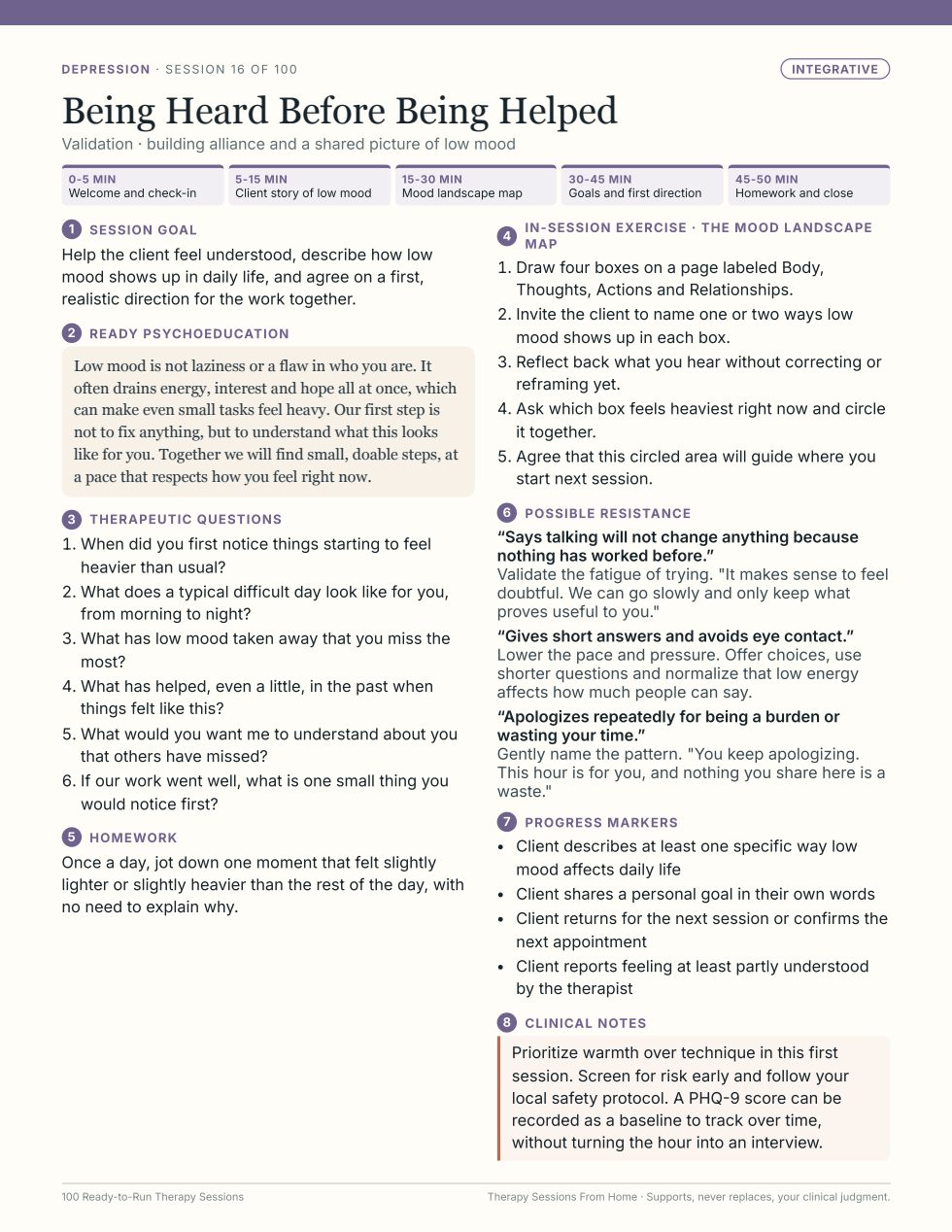
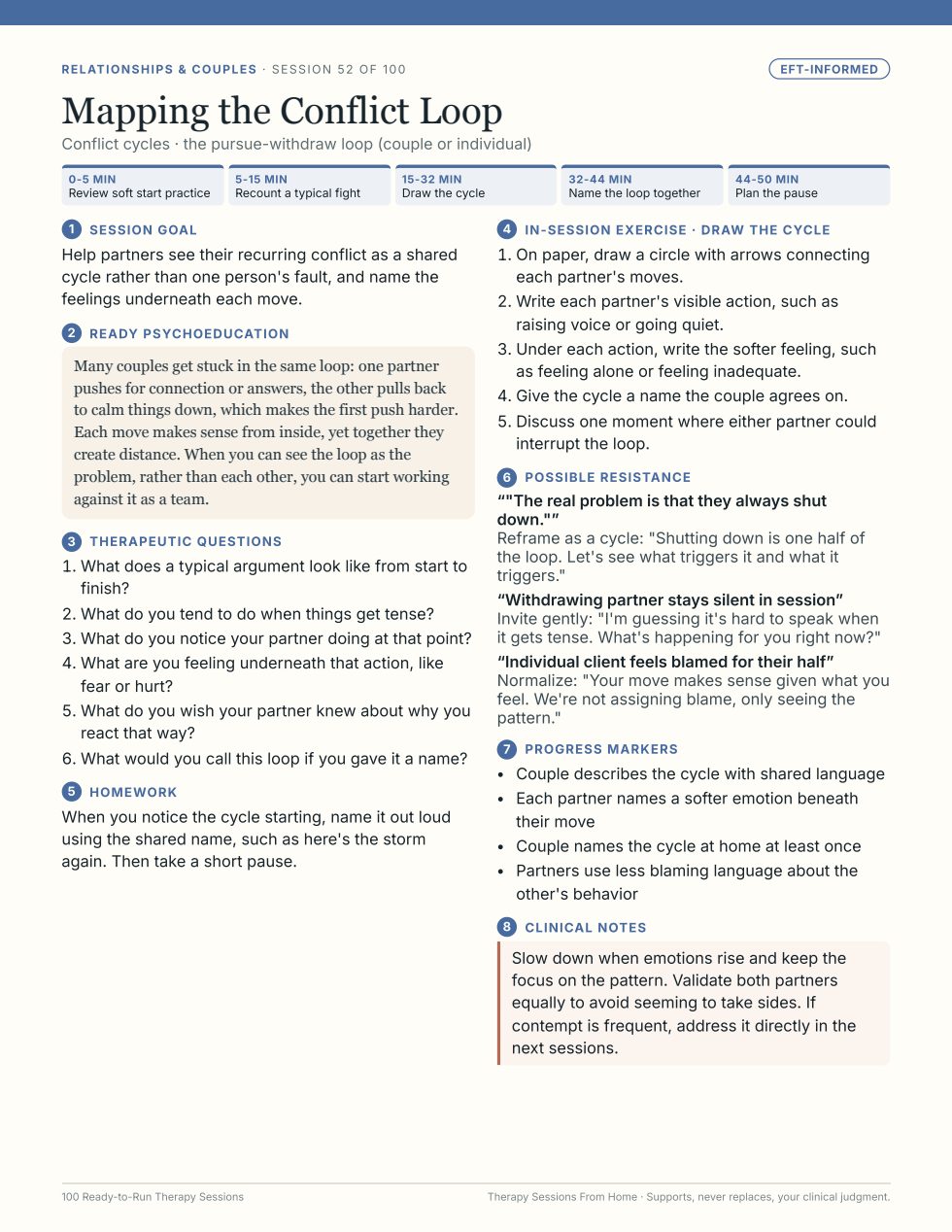
Each session gives you a starting point to turn broad issues into sessions with a purpose: goal, exploration, activity, questions, homework and important cautions.
Pick the session that fits what your client is bringing and set the focus of the hour in a few minutes.
Use questions, exercises and a 50-minute flow to go deeper without turning the hour into an interrogation.
Set the next steps, the practice between sessions and the progress markers to watch, with more clarity.
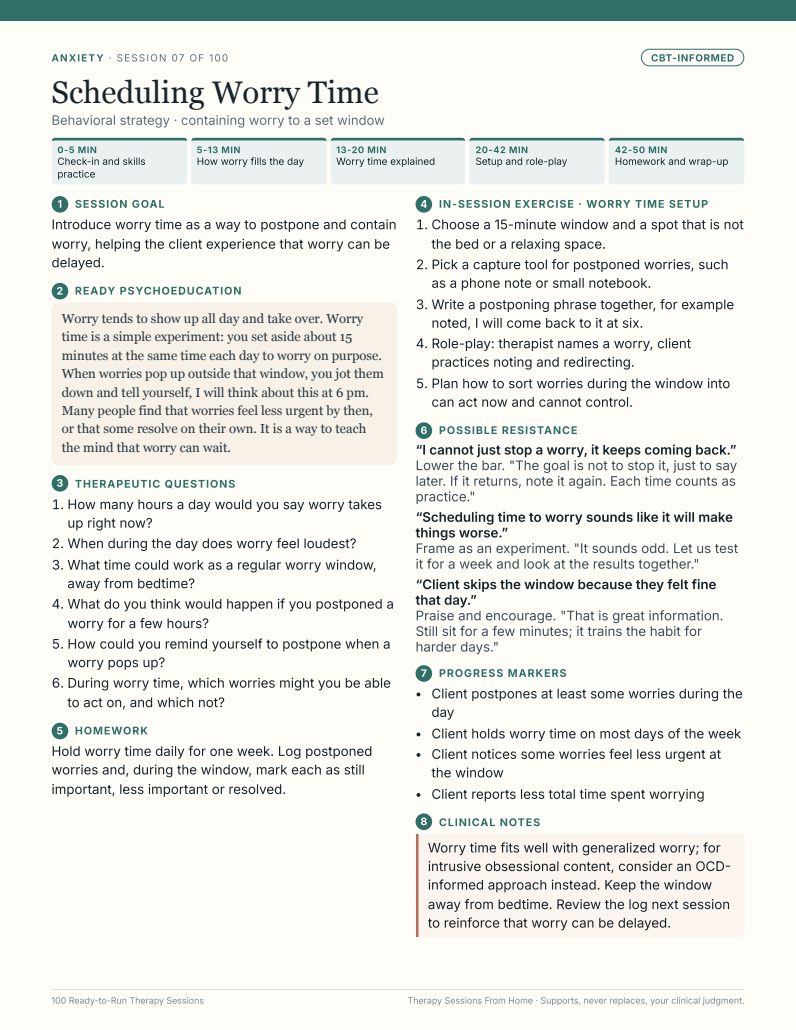
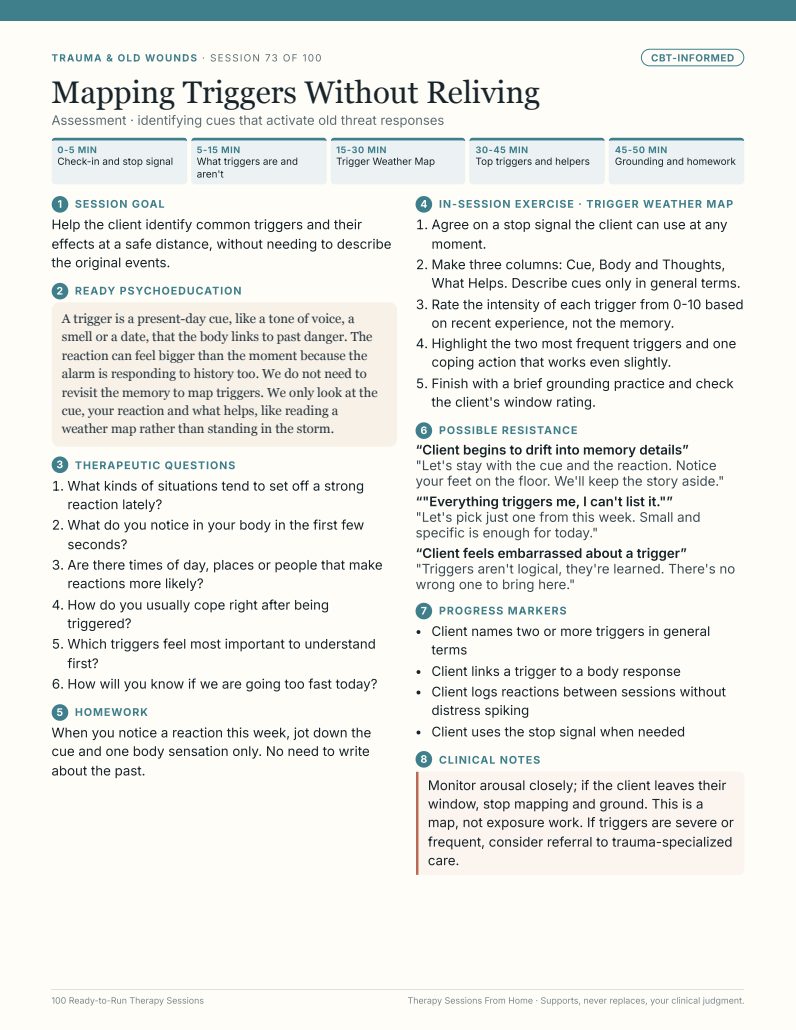
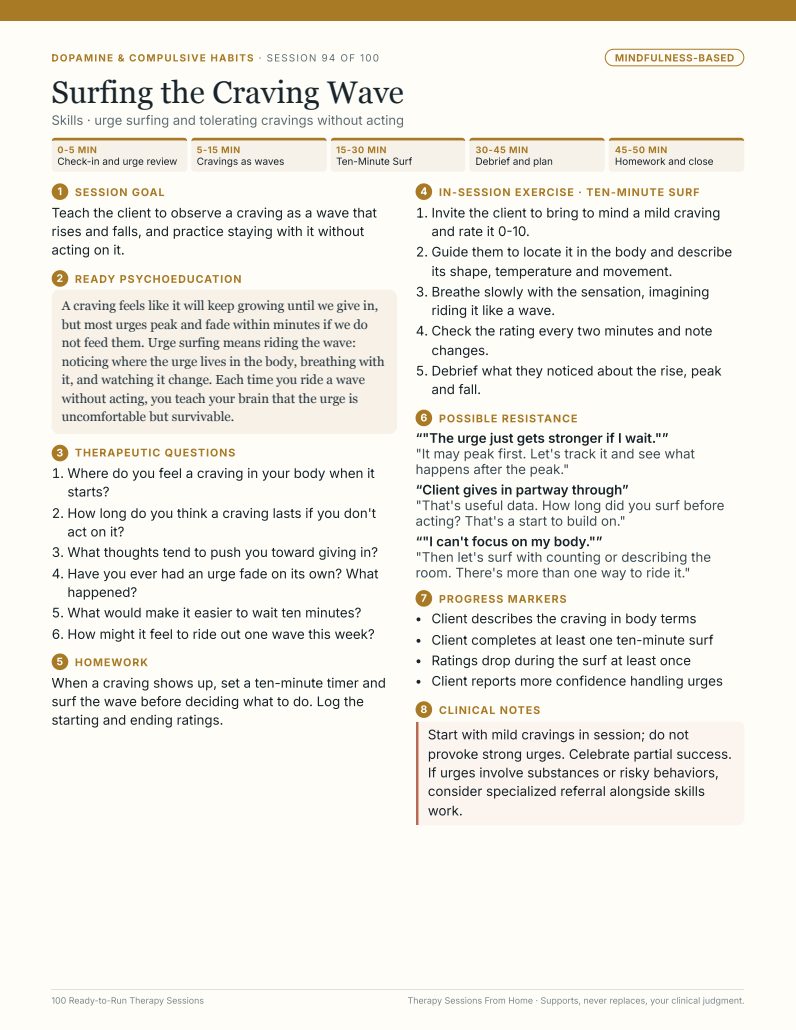
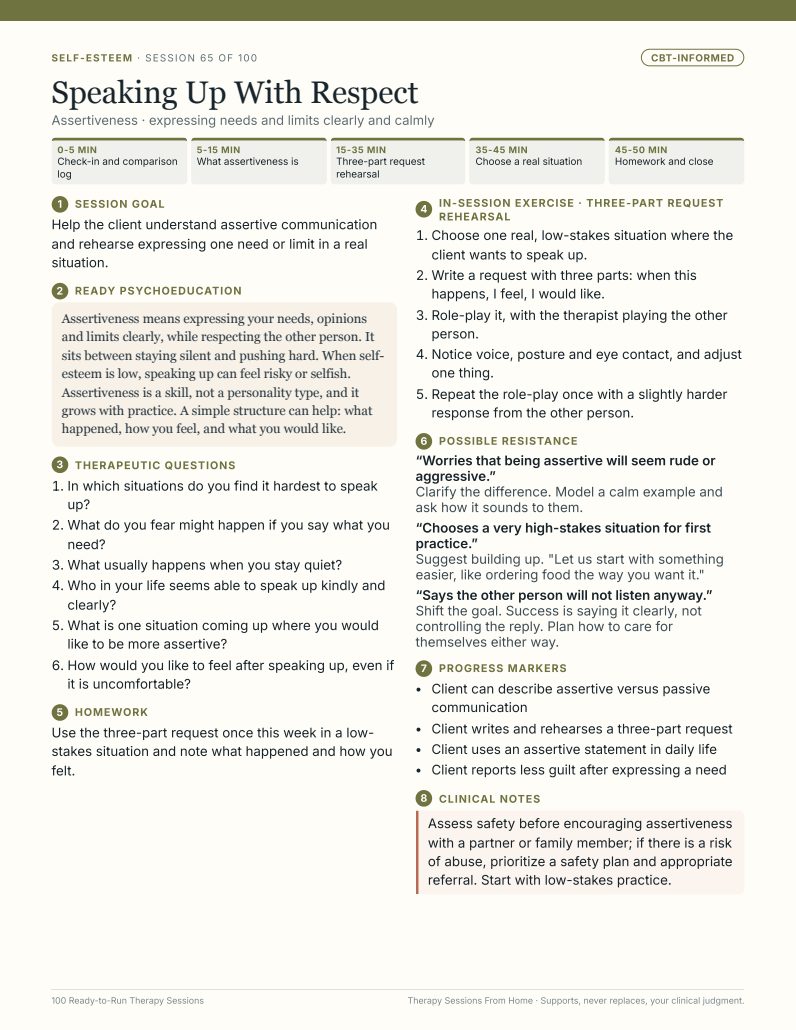
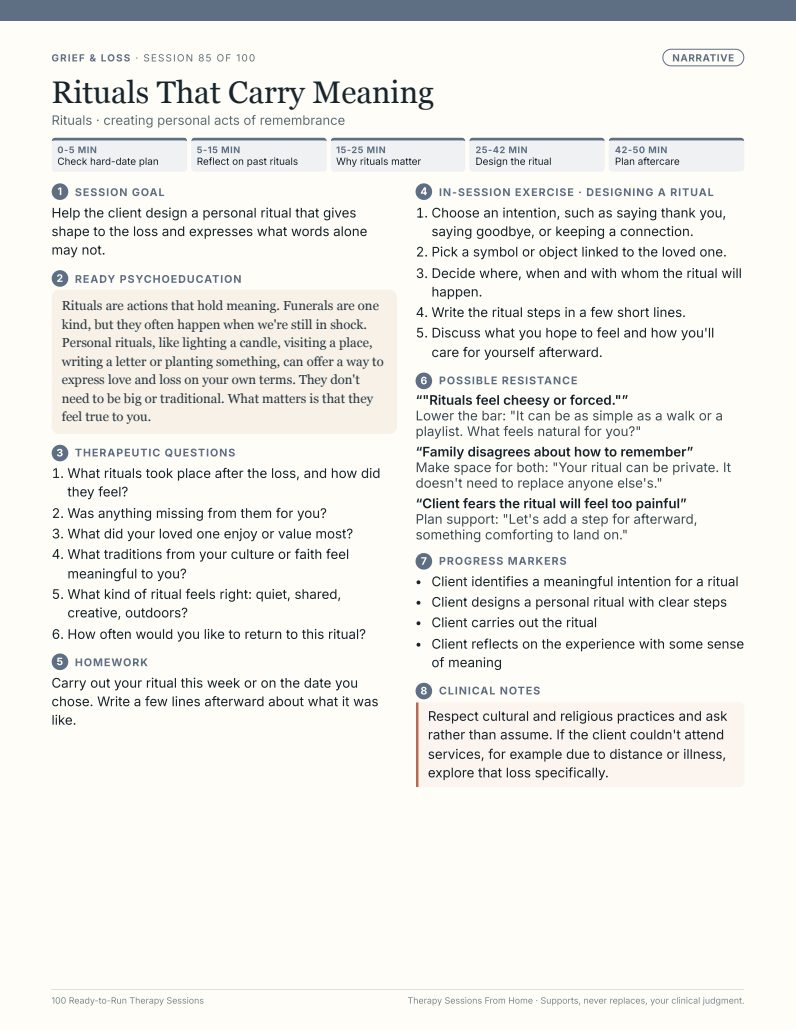
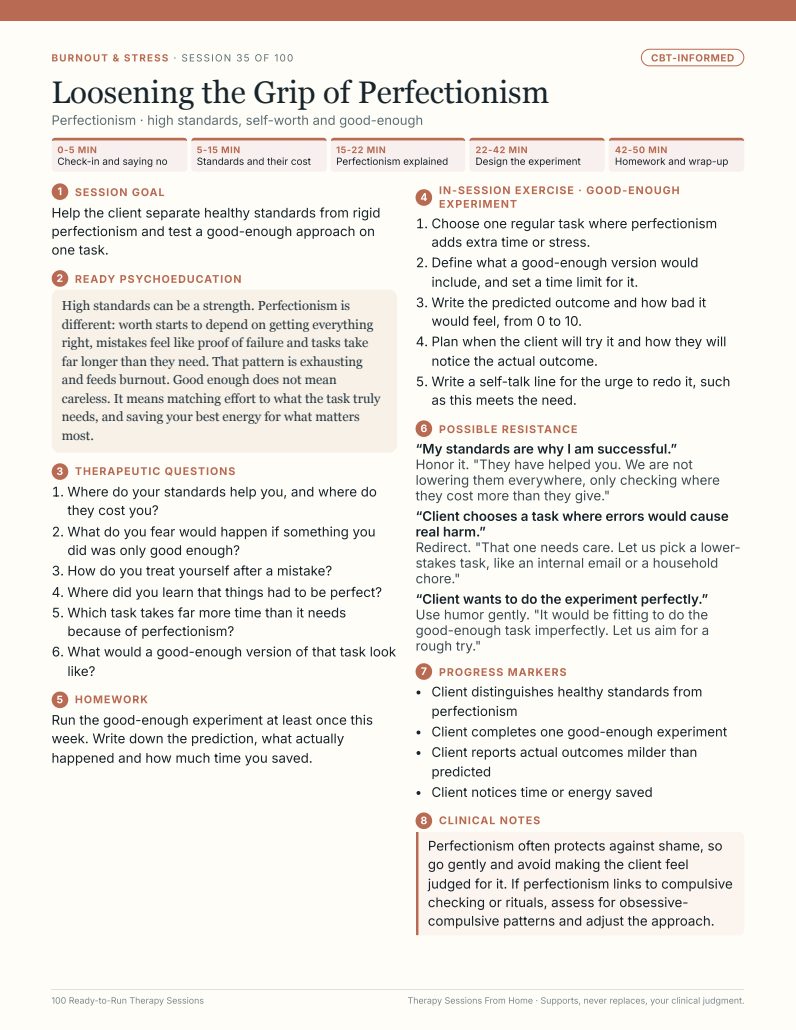
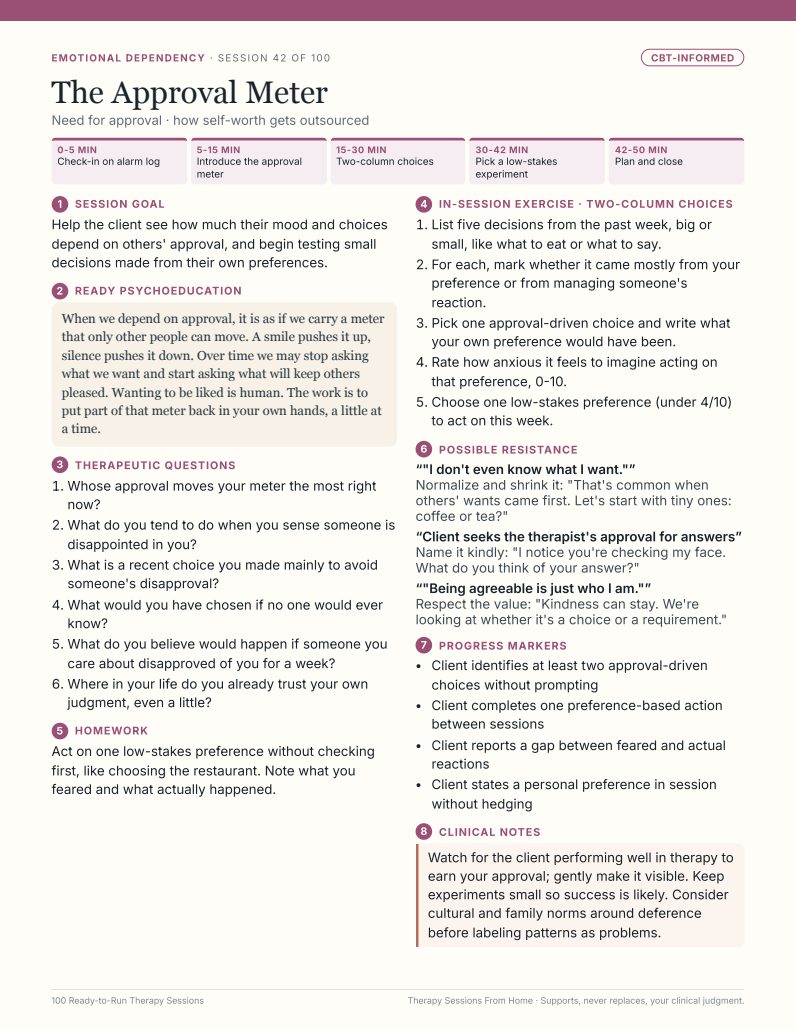
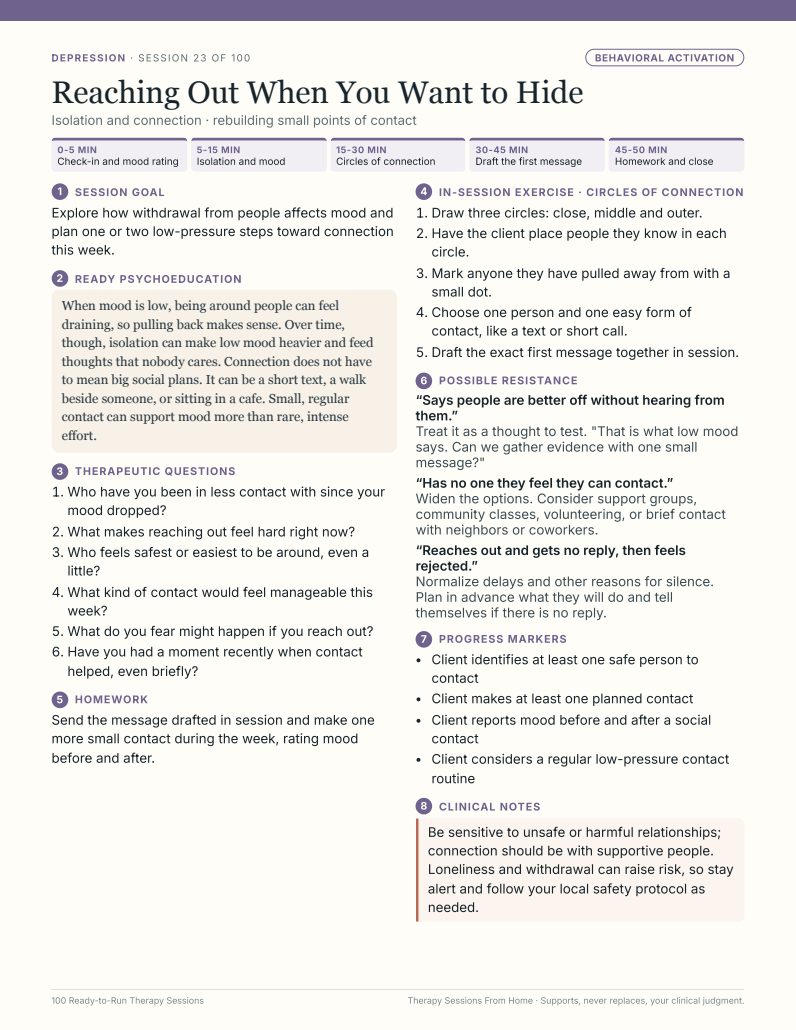
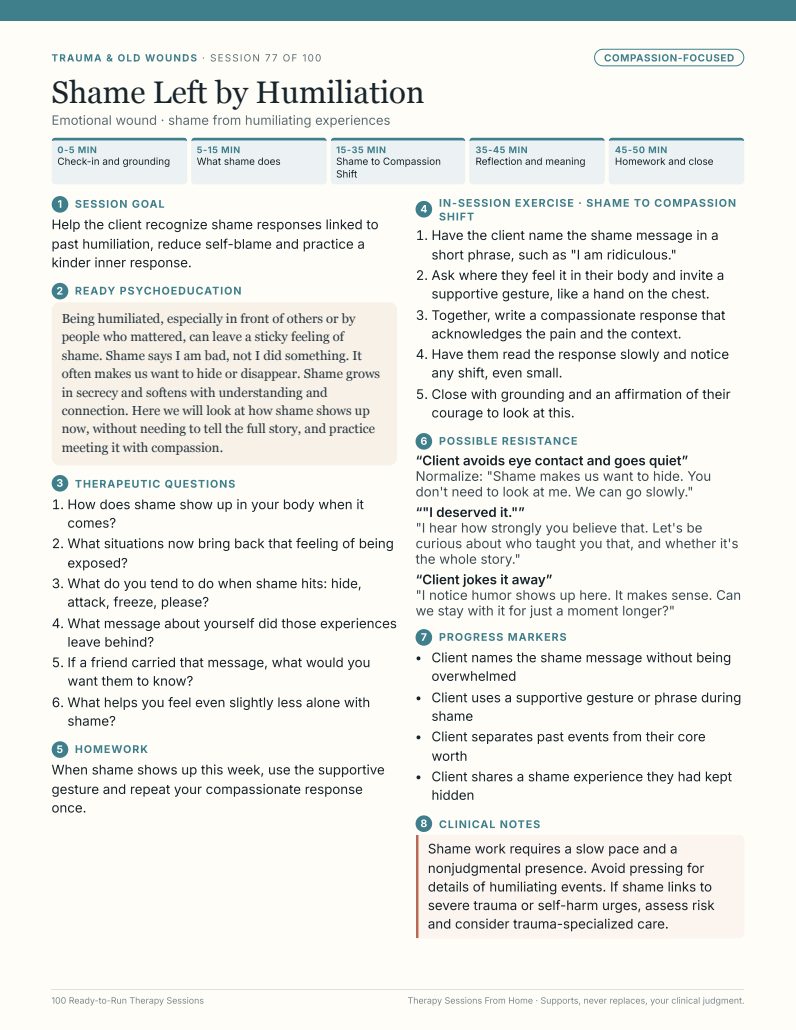
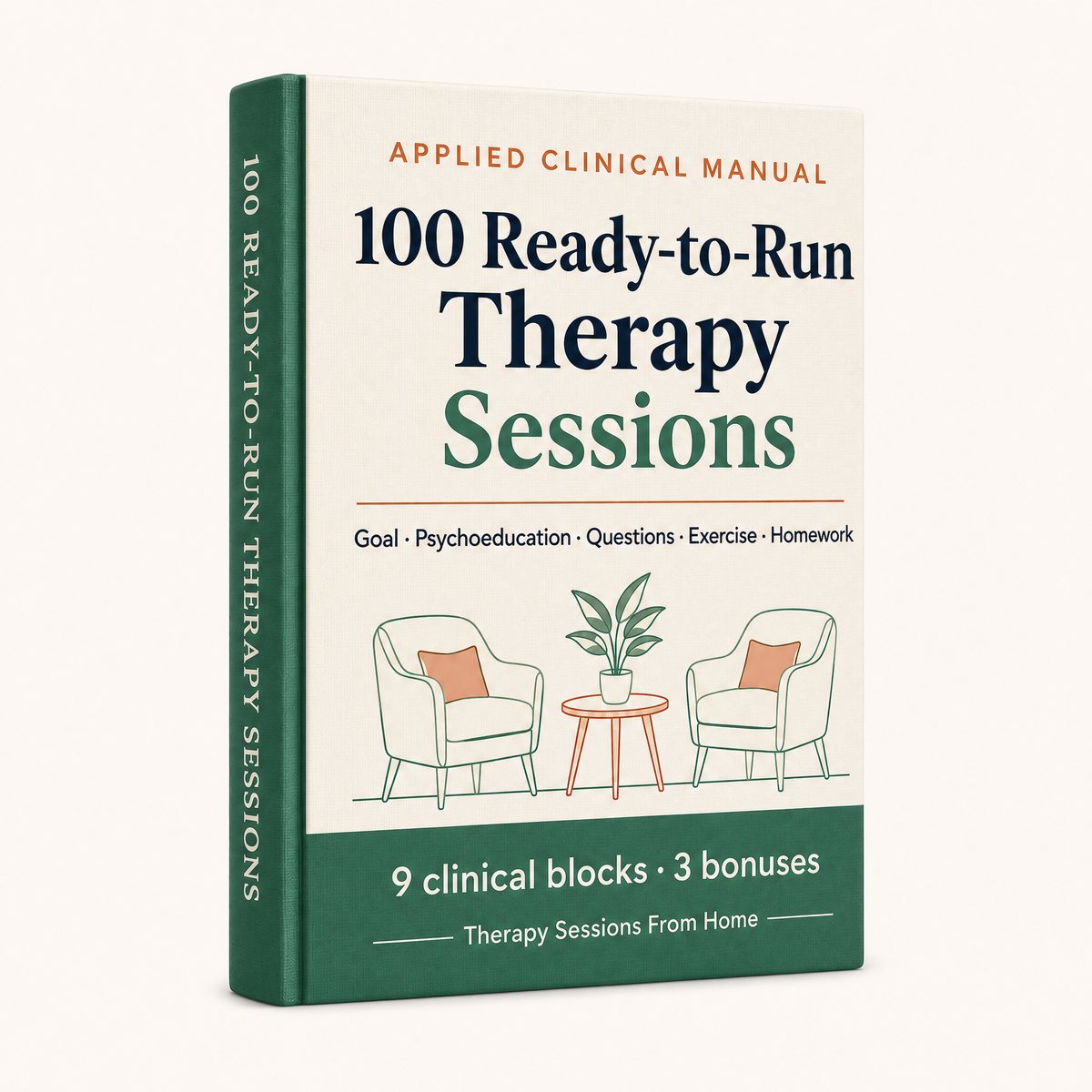
Find the theme you need, pick the right session and adapt the intervention to the case. All organized to read, print and use as professional support.
From building the alliance to maintenance and relapse prevention: a repertoire to choose from according to each person's goals and needs.
Clinical goal, key questions, guided exercise, homework and continuity notes, together in one structure that is easy to check and adapt.
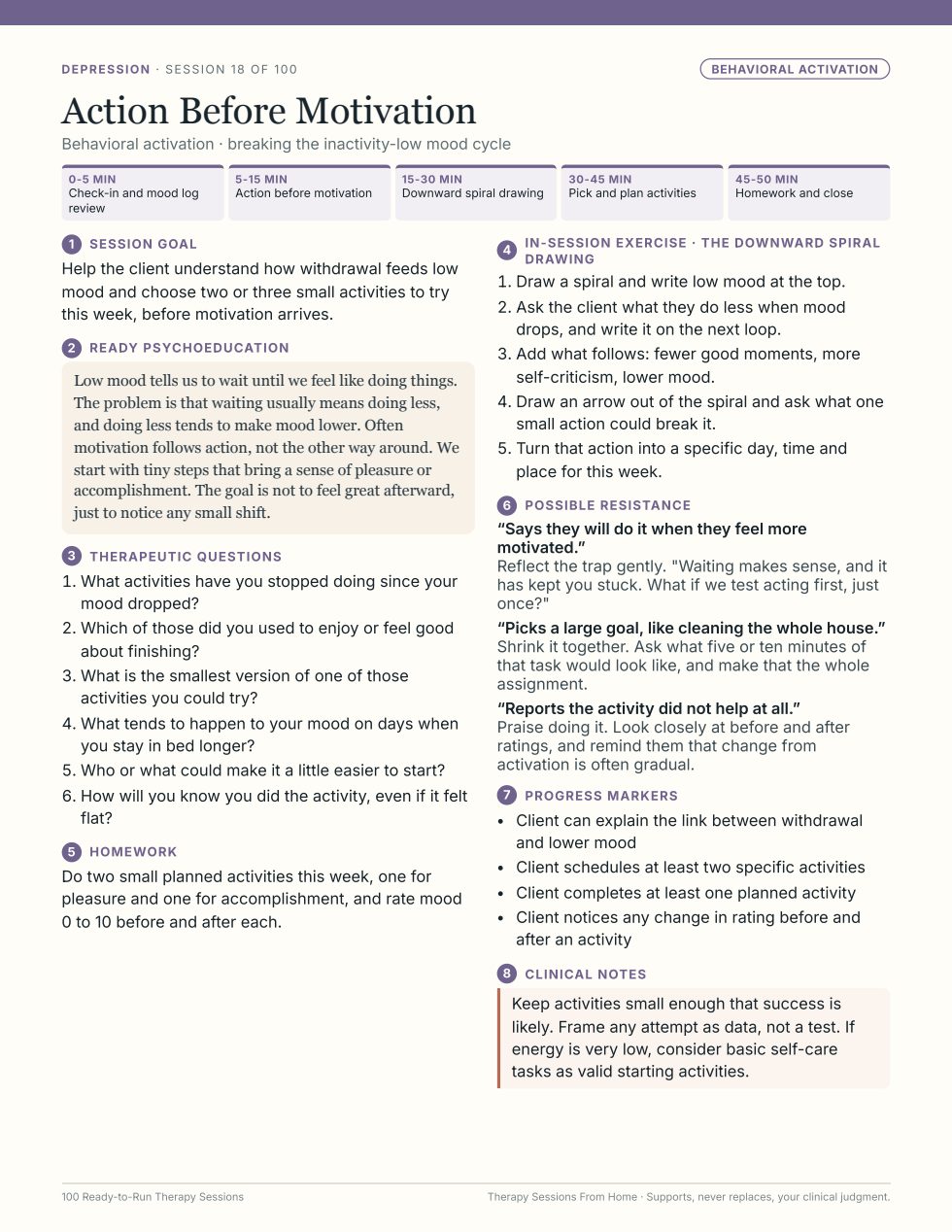
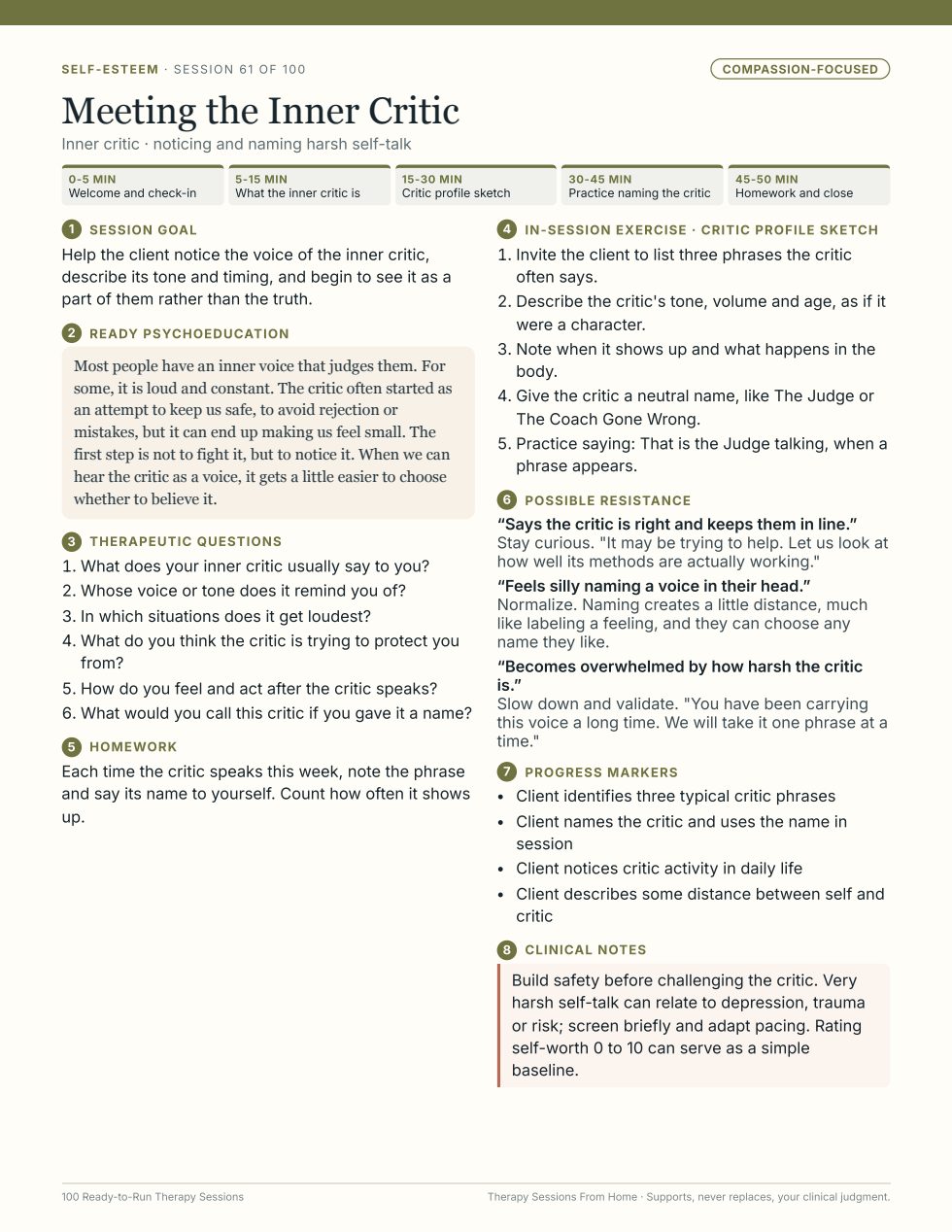
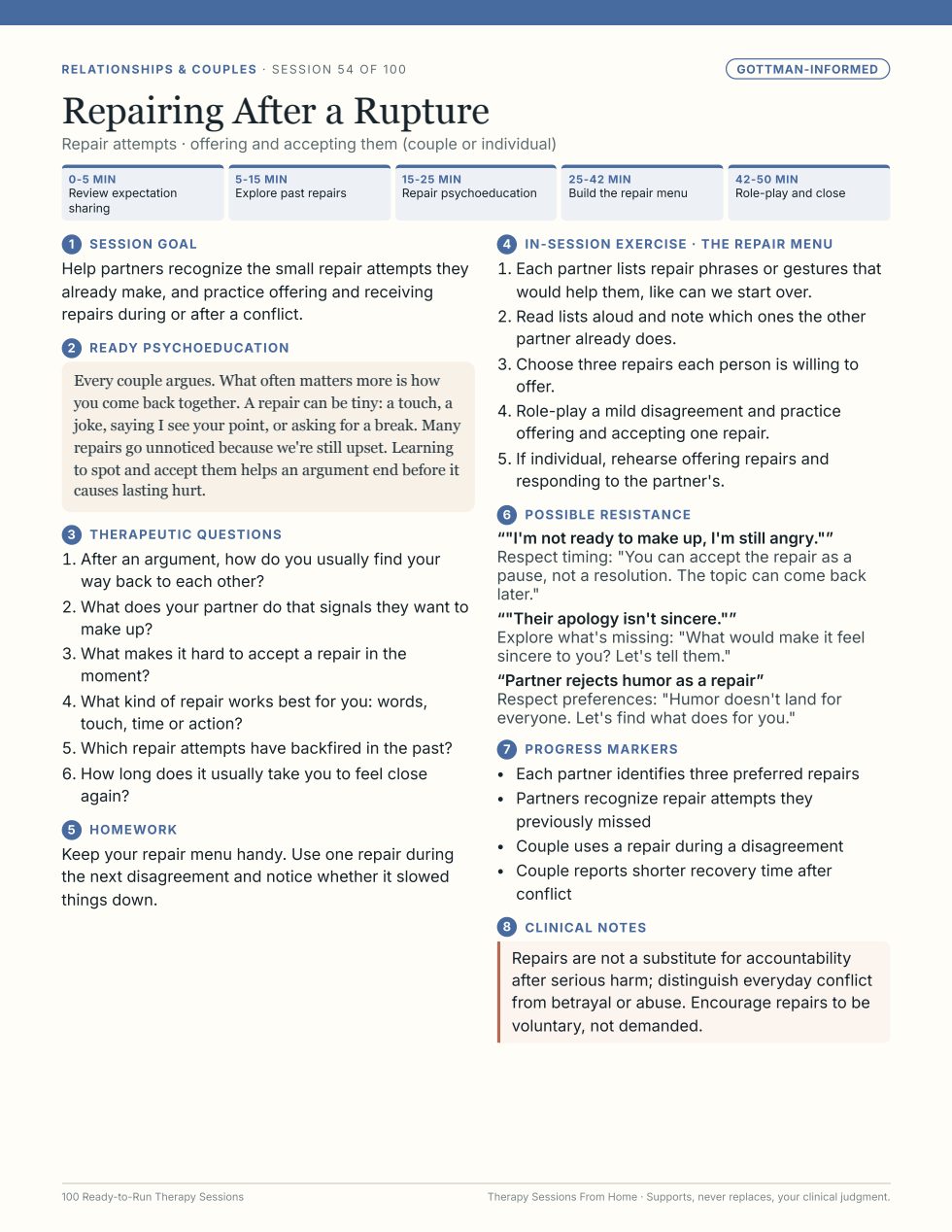
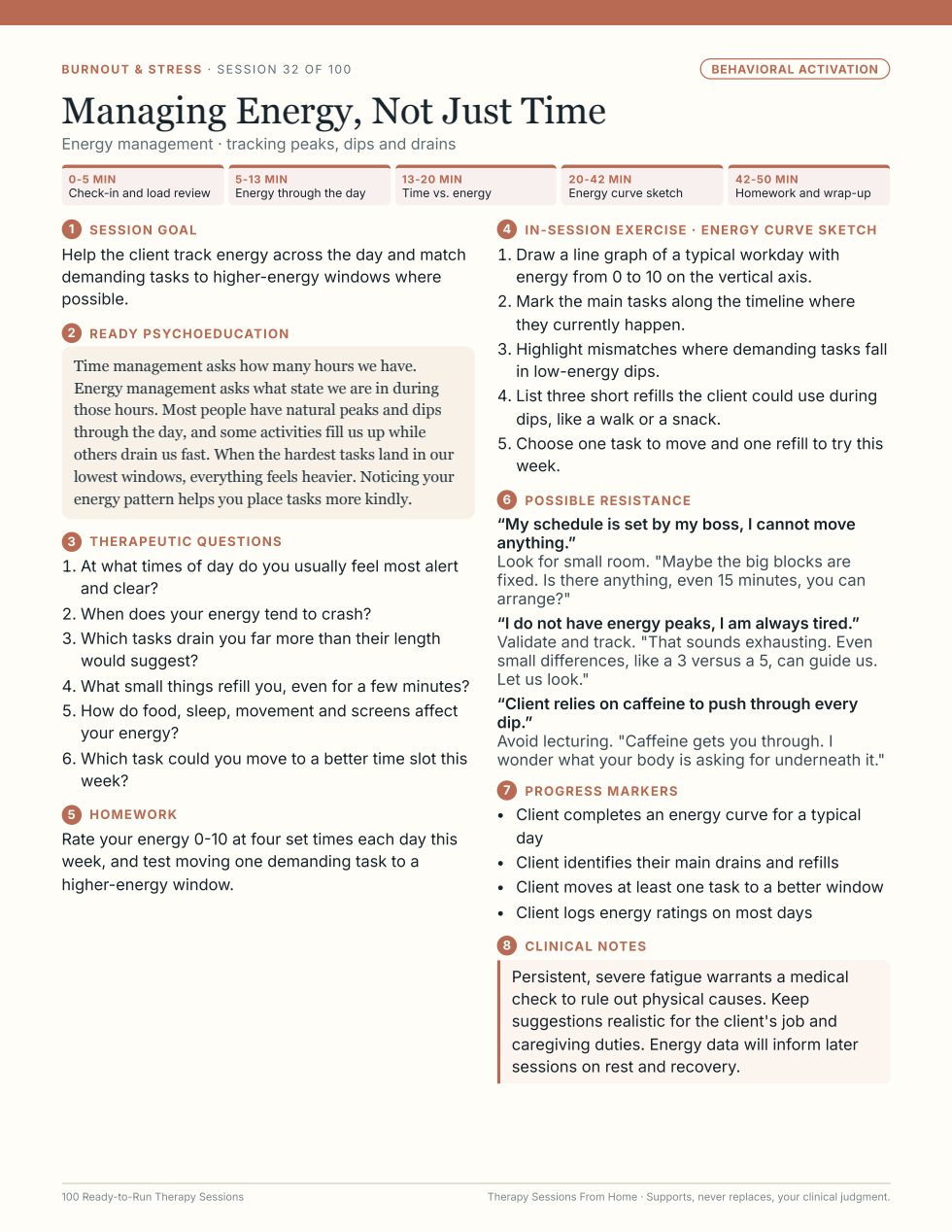
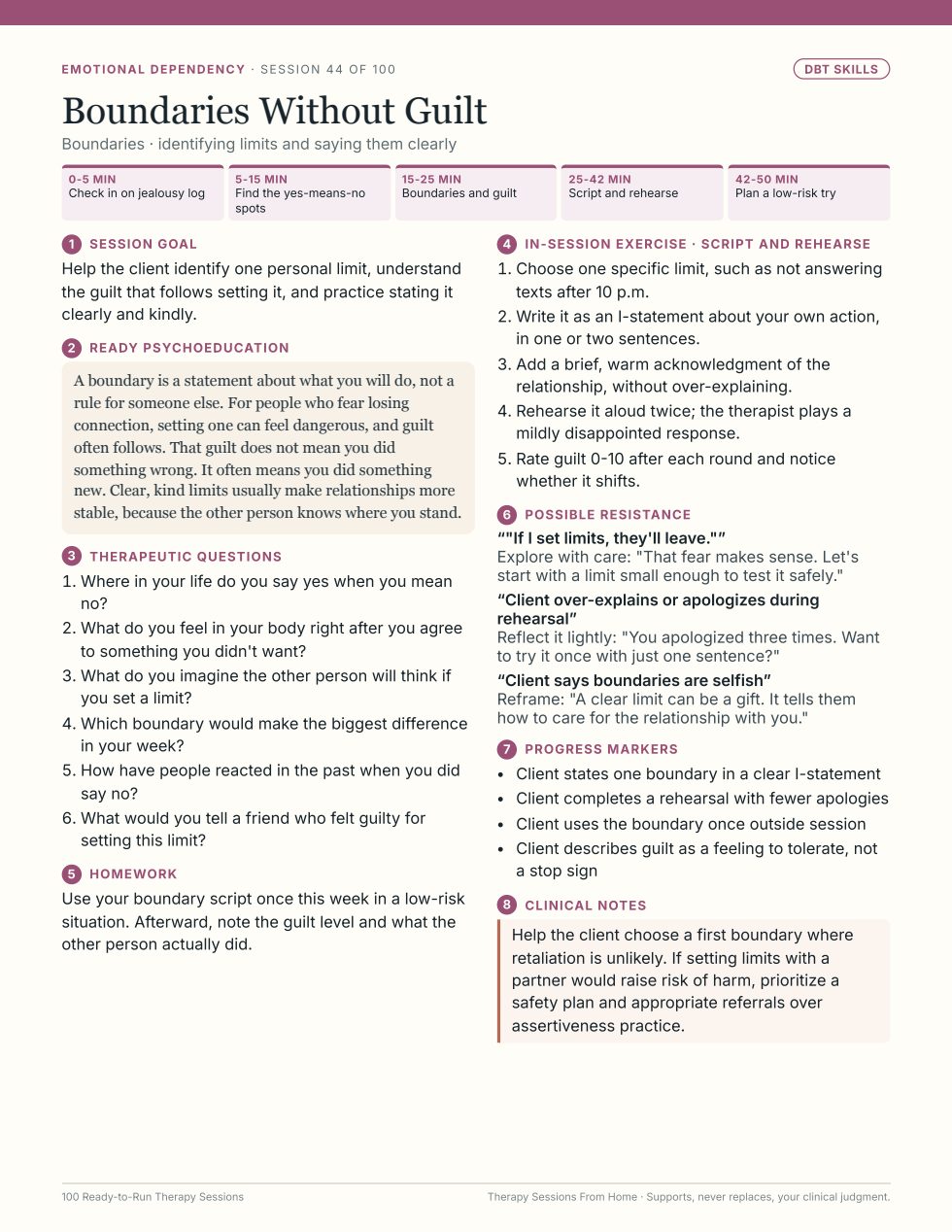
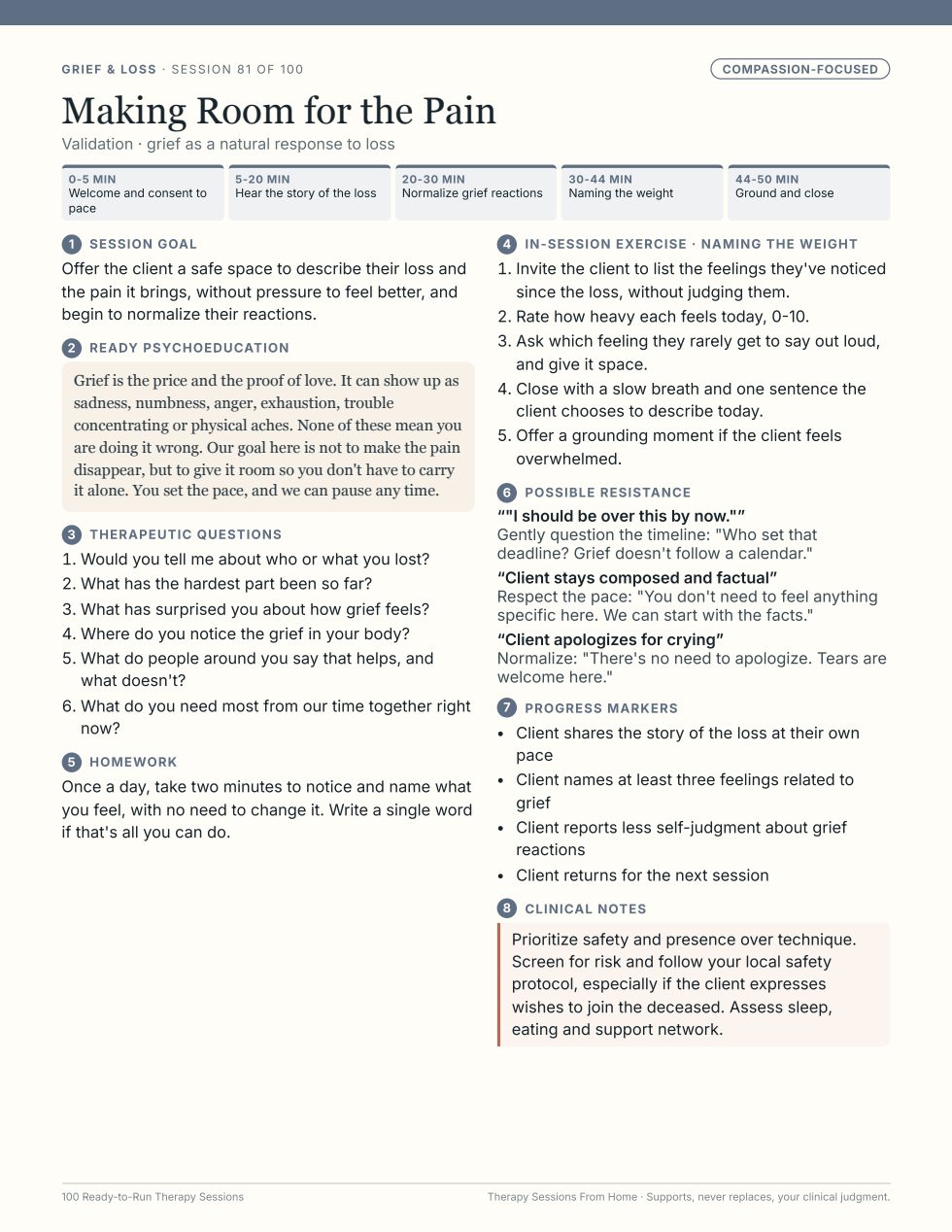
Instead of opening dozens of files and designing an activity from scratch, find a ready session to adapt to the case.
Go deeper on important themes with questions that invite reflection, awareness and new ways to respond.
Use goals, exercises and guidance to keep the session focused without making the intervention rigid.
Ready psychoeducation explains emotional cycles and behavior patterns in plain words.
The structure is already there. Adjust the language, pace and activity to each person's reality.
Connect reflections, practice and next steps so the work continues between one session and the next.
Extra resources to print, ask better questions and organize how you track the process.
Activities to support psychoeducation, reflection, logging and practice between sessions.
Questions organized by theme to widen exploration, open new perspectives and go deeper on what matters.
Tools to organize goals, progress, priorities, reviews and next steps, plus a safety checklist and a termination guide.
My second year in private practice, I was spending Sunday nights building plans for twelve clients. I opened the anxiety block on a Monday, ran the worry-time session with a client who had stalled for a month, and for the first time she came back with her homework done. Sunday nights are mine again.
I'm a new LCSW on a heavy caseload. Grief was the area I felt least ready for. I read the grief session the night before, used the “Making Room for the Pain” questions, and my client cried for the first time in six weeks of work. I didn't have to guess what came next.
Couples work used to scare me. The relationships block gave me a sequence to follow across four sessions, from mapping the conflict loop to repairing after a rupture. By week three the couple was using the repair steps at home and told me about it before I asked.
Twenty years in, I don't need scripts. I use it for the psychoeducation: it says in two sentences what takes me five minutes. I printed the burnout pages for a nurse client, and she put her energy curve sketch on her fridge.
Inspired by what therapists share online. Results vary.
Regular price: $297
Today only
US$ 27
One-time payment • Instant digital access
Get instant access · $27Professional support material. Adapt the content to the case, the context and your own clinical assessment. 7-day money-back guarantee.
No. It is a support library for licensed professionals. Every session should be adapted to the client's needs, your approach, the context, your scope and each person's safety.
No. You can look them up by theme and use them flexibly. The order should follow your case formulation and the goals of the work.
Yes. Everything is made for reading on screen and for printing, so you can use worksheets, exercises and homework during or between sessions.
Yes. Newer therapists get a supporting structure; experienced ones widen their repertoire and find new ways into familiar themes.
Access is digital. Right after your payment is confirmed, you get access to your online library, where you can read every session and download the PDFs.